Daayra Ending Explained: Spoliers Alert! Did Prithviraj Sukumaran’s Raman Kumar really deliver justice, or did he misuse his power? Kareena Kapoor Khan’s Ajooni Kohli investigates a controversial police encounter, but the film’s unexpected ending leaves one important question unanswered. Here’s what the climax of Daayra really means.
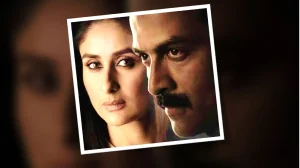

Meghna Gulzar’s crime thriller Daayra, starring Kareena Kapoor Khan and Prithviraj Sukumaran, explores a disturbing crime, a controversial police encounter and two officers who have completely different ideas about justice. While Prithviraj’s DCP Raman Kumar becomes a public hero after four accused men are killed in a police operation, Kareena’s DCP Ajooni Kohli begins questioning whether the encounter was genuine. As her investigation progresses, uncomfortable truths emerge, forcing viewers to reconsider who is actually fighting for justice. But does the film reveal who is right? Let’s break down the ending.
Daayra Ending Explained: What Happens to the Four Accused Men?
The story begins with the disappearance of a young woman named Ragini, whose family struggles to get the police to take her case seriously. When her body is eventually discovered, the horrific crime triggers widespread outrage.
DCP Raman Kumar takes charge of the investigation and arrests four suspects. However, before they can face trial, all four are killed in a police encounter. Raman’s team claims that the men attempted to escape and opened fire, forcing the officers to retaliate.
The encounter immediately turns Raman into a celebrated police officer. For an angry public demanding quick punishment, he appears to have delivered the justice that the legal system might have taken years to provide.
But questions soon emerge about what actually happened during the operation. Was it a genuine exchange of gunfire, or had the police already decided the fate of the accused?
Did Raman Stage the Police Encounter in Daayra?
As Ajooni begins examining the case, inconsistencies in the police account become increasingly difficult to ignore. Her reconstruction of the encounter raises serious doubts about Raman’s version of events.
The evidence suggests that the encounter was staged rather than an unavoidable act of self-defence.
What makes Raman’s character complicated is that he does not see himself as a criminal. He believes the accused deserve punishment and that his actions have protected society from dangerous offenders.
However, his conviction creates the film’s central conflict. Even if the accused are guilty, does a police officer have the right to decide their punishment without a trial?
By questioning Raman’s actions, Daayra challenges the idea that a seemingly desirable outcome can automatically justify unlawful methods.
Why Does Ajooni Investigate Raman Despite Public Support?
Kareena Kapoor Khan’s Ajooni Kohli represents a different approach to policing. Unlike Raman, she believes that an officer’s responsibility is to uphold the law, even when doing so is unpopular.
For Ajooni, the investigation is not about defending the four accused men. It is about establishing whether the police themselves committed a crime.
She understands why people are angry, particularly after the failures that Ragini’s family experienced while seeking help. But she also recognises the danger of allowing police officers to act as investigators, judges and executioners.
Her investigation becomes a test of whether the system is capable of holding its own officers accountable.
Daayra Climax Explained: Does Ajooni Prove Raman Is Guilty?
The final portions of Daayra bring Raman and Ajooni’s opposing beliefs into sharper focus. Ajooni’s findings challenge the official encounter narrative, but the film avoids delivering a conventional courtroom-style resolution.
Rather than concluding with Raman receiving a clearly established punishment or Ajooni publicly announcing a final verdict, the story ends without fully resolving the consequences of her investigation.
Most importantly, viewers are not shown a definitive outcome of Ajooni’s report. Whether Raman eventually faces disciplinary or legal action remains unanswered.
This uncertainty is central to the ending. The film shifts the audience’s attention from what punishment Raman might receive to the larger question of whether his actions can ever be justified.
What Does Daayra’s Open Ending Really Mean?
The ending of Daayra is less about identifying a winner and more about examining two competing definitions of justice.
Raman represents the anger of people who have lost faith in slow investigations and lengthy legal proceedings. His actions offer immediate satisfaction to those who believe the accused deserve the harshest possible punishment.
Ajooni, on the other hand, argues through her investigation that justice loses its meaning when those responsible for enforcing the law begin violating it.
But the film also reminds viewers that this entire confrontation began with a young woman’s suffering and a family’s desperate struggle to receive help.
Ragini’s tragedy raises another uncomfortable question: would the situation have unfolded differently if the authorities had responded properly when her family first approached them?
By focusing on these failures alongside the encounter investigation, Daayra suggests that justice cannot be measured only by how quickly someone is punished. It must also consider how victims are treated, how evidence is examined and whether those in authority are answerable for their decisions.
Daayra Ending: Who Is Right, Raman or Ajooni?
Although Raman’s actions may seem emotionally satisfying to some viewers, Ajooni’s position rests on a fundamental legal principle: no police officer has the authority to replace a fair trial with personal judgment.
Raman believes he has done what the system failed to do. Ajooni believes that allowing such actions to go unquestioned would make the system even more dangerous.
The film does not explicitly settle their conflict. Instead, it leaves viewers considering the difference between revenge, punishment and justice.
Ultimately, Daayra ends with an unresolved question rather than a dramatic final revelation. Through Raman and Ajooni, Meghna Gulzar explores how easily the demand for justice can become a justification for crossing legal and moral boundaries. And that is what makes the ending worth discussing long after the film is over.