
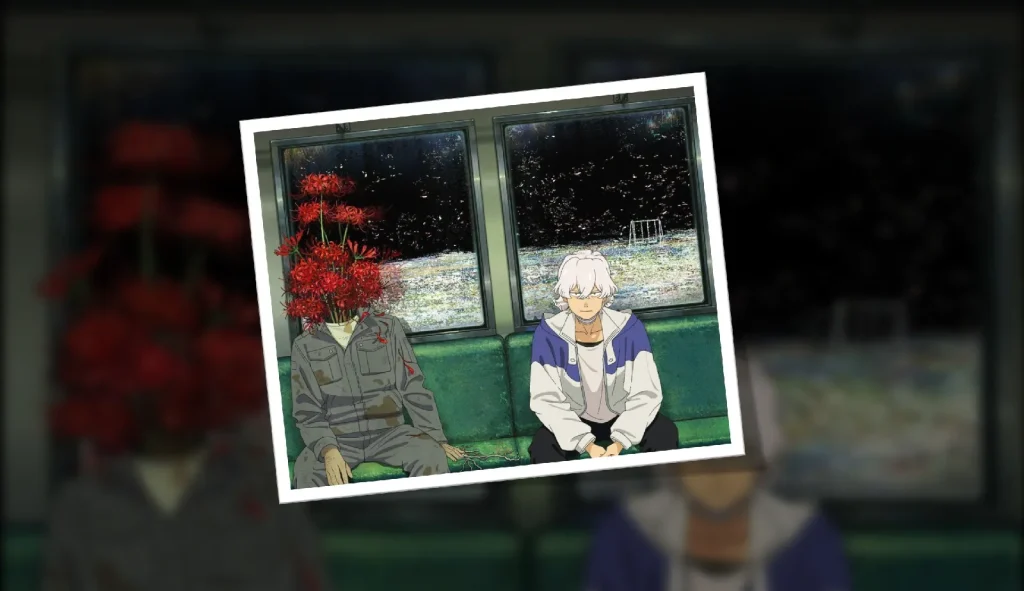
Netflix’s dystopian anime Fool Night, adapted from Kasumi Yasuda’s manga, presents a haunting vision of humanity’s future. With sunlight disappearing and oxygen levels declining, humans have developed a technology that allows people to transform into plants. However, beneath this seemingly revolutionary solution lies a disturbing system of inequality, exploitation and manipulation.
At the heart of the story is Toshiro Kamiya, a young man struggling financially who agrees to undergo Transfloration to support his mother. What begins as a desperate financial decision unexpectedly gives him the extraordinary ability to communicate with humans who have transformed into plants.
As Toshiro encounters heartbreaking stories, investigates a mysterious killer and uncovers the secrets of Central, he begins questioning everything he knows about humanity’s survival.
Fool Night Ending Explained: What Happens to Toshiro, Ivy and Central’s Secret Plan?
But what does the ending mean? What happens to Ivy? And why is Toshiro so important to humanity’s future? Here is the Fool Night ending explained.
Warning: Major spoilers ahead!
Why Does Toshiro Agree to Give Up His Humanity?
In the world of Fool Night, becoming a plant is no longer something unimaginable. With the planet struggling to sustain human life, Transfloration has become an essential part of civilization.
However, not everyone volunteers for the procedure out of concern for humanity.
Toshiro agrees to undergo the transformation because of his difficult financial circumstances. Supporting his mother, Kaori, has become increasingly challenging, and the compensation offered through Transfloration appears to be his best option.
He initially has no grand ambitions of changing society. He simply wants to improve his circumstances while he still can.
Everything changes when Toshiro discovers that he can communicate with Spiriflora, the plants created from transformed humans. His unusual gift allows him to access experiences and emotions that would otherwise remain hidden.
Through these encounters, Toshiro discovers that becoming a plant does not necessarily mean losing every connection to one’s human existence.
How Sumi’s Story Reveals the Emotional Cost of Transfloration
One of Toshiro’s most emotionally challenging encounters involves Sumi Matsuno, a gifted pianist searching for the Spiriflor of her father, Shogo.
Although Sumi possesses remarkable musical talent, her relationship with the piano is deeply complicated. Throughout her childhood, Shogo subjected her to physical abuse whenever she made mistakes during practice.
His transformation into a plant did little to free her from the psychological consequences of that abuse. Every time she played the piano, the painful memories returned.
Determined to escape her father’s influence, Sumi initially intends to destroy his Spiriflor by setting it on fire.
However, Toshiro’s ability creates an unexpected opportunity for confrontation. Sumi can finally express the suffering she endured, while Shogo is made to recognize the damage his actions caused.
Ultimately, Sumi chooses to have her father’s Spiriflor turned into a piano.
The decision carries considerable symbolic significance. An instrument once associated with punishment becomes something she can reclaim on her own terms.
Her story also establishes one of the anime’s central ideas: Transfloration may change a person’s physical existence, but it cannot erase the consequences of their actions.
Who Is Ivy? The Heartbreaking Truth About Mukuru Izumi
The mystery surrounding Ivy, a dangerous Spiriflor responsible for multiple deaths, becomes considerably more tragic when his human identity is revealed.
Ivy was originally Mukuru Izumi, a young boy who lived with his sister, Shiika, in the impoverished district of Paupertown.
The siblings grew up facing extreme hardship. Mukuru suffered brain damage and paralysis following oxygen deprivation, leaving him physically unable to search for his missing sister.
When Dr. Kudai offered him an experimental form of Transfloration, Mukuru saw an opportunity to regain his mobility and reunite with Shiika.
Unfortunately, what awaited him was another devastating discovery.
Shiika had already undergone Transfloration, and her transformed body had been used to create furniture.
The realization destroys Mukuru’s hopes of recovering the life he once shared with his sister. His grief eventually develops into violent resentment, transforming him into the dangerous figure known as Ivy.
His history exposes the cruelty of a society where economically vulnerable individuals can lose control over their own bodies and futures.
Why Does Ivy Target Yomiko?
Mukuru’s conflict with Yomiko becomes deeply personal when she acknowledges her involvement in Shiika’s fate.
Yomiko reveals that she arranged Shiika’s Transfloration to protect herself. For Mukuru, this confession confirms that his sister’s suffering was not simply an unavoidable consequence of the world’s environmental crisis.
It was also the result of decisions made by other people.
Mukuru attempts to kill Yomiko, but Toshiro intervenes before he can succeed.
What makes this confrontation particularly meaningful is that Toshiro does not dismiss Mukuru’s suffering. He recognizes the injustice the young boy experienced and understands that his circumstances were shaped by a deeply unfair system.
Nevertheless, Toshiro refuses to accept murder as a solution.
He believes Mukuru must take responsibility for his actions, even while holding onto the possibility that he can eventually be saved.
The encounter reinforces Toshiro’s growing belief that compassion and accountability can coexist.
What Is Central Hiding About Humanity’s Future?
The mystery surrounding Ivy eventually leads to a much larger conspiracy involving Central, the organization connected to humanity’s response to the oxygen crisis.
Information obtained during the train confrontation exposes the involvement of Dr. Kudai and the Anti-Transfloration Movement in Ivy’s creation.
However, Kudai’s revelations about Central are even more unsettling.
Around the year 2200, extensive cloud coverage prevented sufficient sunlight from reaching the planet. As vegetation declined, humanity faced a potentially catastrophic shortage of oxygen.
Central responded by developing Transfloration, allowing human beings to become plants capable of contributing to oxygen production.
Although the technology was presented as a solution for humanity’s survival, Central’s members allegedly had a very different plan for themselves.
Rather than undergoing the same transformation, they withdrew to Antarctica, intending to return centuries later after the planet’s vegetation had recovered.
Their strategy effectively depended on generations of ordinary humans surrendering their bodies to rebuild an environment that Central’s members could eventually inhabit.
This revelation fundamentally changes the meaning of Transfloration. What initially appeared to be a collective sacrifice becomes a system in which the responsibilities and rewards of survival are distributed unequally.
Why Is Dr. Kudai Opposed to Central’s Plan?
Dr. Kudai believes Central is doing more than controlling humanity’s current circumstances.
According to him, the organization is attempting to restrict technological progress that could interfere with its long-term objectives.
Institutions such as Transflora Medical and the Transfloration Board are connected to this broader system, raising uncomfortable questions about how much freedom ordinary citizens actually possess.
If alternative technologies could help humanity survive without requiring widespread Transfloration, Central’s carefully constructed future might no longer be necessary.
Kudai’s experiments appear to represent an attempt to discover such an alternative.
However, his involvement in Mukuru’s transformation makes him a morally complicated character. Although he challenges Central’s agenda, his own methods have contributed to considerable suffering.
The anime leaves viewers questioning whether Kudai genuinely represents a better future or merely another individual willing to sacrifice others in pursuit of his ambitions.
Fool Night Ending Explained: What Happens to Toshiro During the Train Confrontation?
During the confrontation aboard the train, Toshiro suffers severe injuries that threaten his survival.
While examining him, Kudai notices roots emerging from Toshiro’s body. The discovery immediately attracts his attention, suggesting that Toshiro’s transformation may possess characteristics that distinguish him from ordinary Spiriflora.
Kudai ensures that Toshiro receives medical assistance.
Following extensive surgery, Toshiro survives and eventually regains consciousness. Meanwhile, Kudai manages to escape with Ivy.
Although Toshiro’s immediate survival is secured, the incident raises several important questions about his condition.
His ability to communicate with Spiriflora already makes him unusual, but the physical changes observed by Kudai suggest that there may be something even more significant about his existence.
Instead of providing a definitive explanation, the anime positions Toshiro as a potential key to understanding the next stage of humanity’s development.
What Does the Mysterious Flower Field Mean?
One of the most intriguing sequences in the final episode takes place in a field filled with flowers, where Toshiro encounters Mukuru.
The flowers appear to contain memories and emotional experiences associated with living beings.
This discovery suggests that Toshiro’s abilities extend beyond simply hearing the voices of transformed humans. His connection may allow him to access a deeper network of consciousness and experiences.
Mukuru also identifies something connected to Antarctica through one of the flowers, potentially linking this mysterious space to Central’s hidden activities.
The precise nature of the flower field remains unexplained.
Nevertheless, the sequence suggests that Transfloration may have produced unexpected possibilities that even its original developers did not fully understand.
It also establishes a compelling mystery for a potential continuation of the story. If memories and consciousness can survive in this interconnected form, the distinction between human and plant existence may be far more complicated than previously believed.
Why Does Kudai Want to Find Toshiro’s Creator?
Another major revelation concerns Kudai’s own physical condition.
He admits that he underwent Transfloration three years earlier. Since then, he has attempted to delay the transformation by surgically removing the branches and leaves developing from his body.
However, this approach is becoming increasingly difficult to sustain.
Kudai realizes that his time may be running out, making his interest in Toshiro and Mukuru particularly urgent.
He asks Yomiko to locate the researcher responsible for creating Toshiro, believing that these extraordinary individuals may represent a new evolutionary possibility.
Rather than accepting Central’s vision of a future built upon human sacrifice, Kudai hopes their abilities could reveal another direction for humanity.
However, the ending does not establish whether his theory is correct. The identity of Toshiro’s creator remains a mystery, as does the true extent of his extraordinary powers.
What Does Toshiro’s Final Conversation With His Mother Signify?
Despite its enormous scientific and political mysteries, Fool Night concludes Toshiro’s journey on a deeply personal note.
During a visit to his mother, Kaori, Toshiro expresses his intention to help other people.
The moment highlights how profoundly his experiences have changed him.
At the beginning of the anime, Toshiro was primarily concerned with escaping financial hardship. His decision to undergo Transfloration was driven by desperation rather than a desire to make a difference.
However, his encounters with Sumi, Mukuru and other individuals have exposed him to suffering that extends far beyond his own circumstances.
He has discovered that his unusual gift allows him to reach people whose experiences might otherwise remain unheard.
Although he cannot immediately dismantle Central’s system or reverse the planet’s environmental crisis, he can choose how to use his remaining time and extraordinary abilities.
His decision to help others represents his determination to find purpose in a world that has repeatedly denied people control over their lives.
Fool Night Ending Meaning: Is Transfloration Humanity’s Salvation or Its Greatest Mistake?
The ending of Fool Night deliberately avoids offering a straightforward answer.
Transfloration has helped address a genuine environmental catastrophe, but the technology has also enabled powerful institutions to exploit vulnerable individuals.
Central’s secret agenda demonstrates how a solution created in the name of collective survival can become a mechanism for preserving privilege.
Meanwhile, Mukuru’s story exposes the devastating consequences of treating human lives as resources rather than recognizing their individual value.
Toshiro represents a different possibility. His ability to communicate with Spiriflora restores a sense of individuality to people society might otherwise regard as ordinary vegetation.
Ultimately, Fool Night is not simply a story about humans becoming plants. It explores inequality, bodily autonomy, scientific ethics, grief and the meaning of humanity itself.
While Central attempts to determine the future through control, Toshiro chooses to move forward through compassion. Whether his extraordinary abilities can eventually change civilization remains uncertain, but his transformation into someone willing to stand up for others provides the anime with an unexpectedly hopeful conclusion.
Also Explore: 15 Best Shows Like Fool Night
Will There Be a Fool Night Season 2?
The first season leaves several significant mysteries unresolved, including Toshiro’s origins, Kudai’s experiments, Mukuru’s future and the truth behind Central’s activities in Antarctica.
These unanswered questions provide considerable scope for a second season, particularly as Toshiro begins exploring the greater potential of his abilities.
However, the ending itself does not confirm a second season.
Where to Watch Fool Night?
All 12 episodes of Fool Night are available to stream on Netflix. The anime premiered on November 26, 2026.