Other Mommy ending explained: The Jessica Chastain horror film concludes with seven-year-old Bela escaping a terrifying attempt to steal her body, but her survival doesn’t mean the nightmare is completely over. Although Bela manages to resist the supernatural creature that has been manipulating her, the movie leaves two disturbing questions unanswered: Why does Ursula appear so unhappy after her daughter survives, and what does the creature’s unexpected return after the credits mean?
Spoilers ahead for Other Mommy (2026).
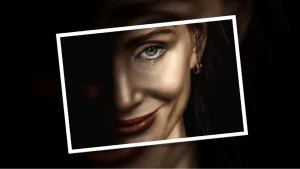

Drawing its story from Josh Malerman’s novel Incidents Around the House, director Rob Savage’s Other Mommy introduces viewers to Bela (Arabella Olivia Clark), a seven-year-old whose increasingly unsettled home becomes the hunting ground for an unnatural presence concealed inside her closet. As tensions within her family grow, the mysterious intruder begins exploiting the emotional distance between Bela and the people closest to her.
But beneath its seemingly comforting promises lies a horrifying objective. The entity wants Bela to willingly surrender control of her own body.
As the story reaches its conclusion, Bela must confront an uncomfortable truth about her parents to protect herself. The film also takes a different route from the novel, allowing Bela a chance to escape the devastating outcome awaiting her on the page. Yet the closing moments reveal an equally uncomfortable reality: surviving a supernatural nightmare cannot magically resolve the tensions that existed long before the creature appeared.
Here’s our breakdown of Other Mommy’s ending, the creature’s real intentions, Ursula’s unsettling reaction, the post-credits surprise and the meaning behind the film’s biggest departure from the book.
What Happens in Other Mommy? The Story Explained
At the centre of Other Mommy is Bela, a seven-year-old girl growing up in a household where emotional security is becoming increasingly difficult to find.
Her mother, Ursula (Jessica Chastain), is frequently occupied with work and is secretly involved with Frank (Arian Moayed), a family friend. Meanwhile, her relationship with Bela’s father, Russ (Jay Duplass), is strained.
Although the grown-ups keep much of their personal turmoil outside Bela’s understanding, their changing behaviour and the uneasy atmosphere at home leave her feeling increasingly uncertain about the world around her.
This uncertainty creates an opportunity for the mysterious presence living inside her closet.
The entity, which Bela calls Other Mommy, resembles Ursula so closely that distinguishing the two becomes increasingly difficult. Rather than presenting itself only as a frightening intruder, it attempts to establish a personal connection with the child.
It offers attention, affection and assurances that it can keep her safe from everything upsetting her.
Yet its kindness comes with a disturbing condition.
Other Mommy repeatedly asks Bela to allow it into her heart. What initially sounds like an affectionate request is actually the creature’s attempt to obtain permission to take possession of her body.
The entity is capable of terrifying violence, including destroying people through its supernatural powers. However, its ability to cause physical harm is different from its ability to possess Bela.
For that, it needs her agreement.
This limitation becomes one of the most important details in the entire story.
Other Mommy Ending Explained: Does the Entity Possess Bela?
No, Bela does not become possessed by Other Mommy in the film’s ending.
Despite the creature’s persistent attempts to convince her that it can provide a better life, Bela ultimately refuses to let it take control.
What makes this resolution significant is that she doesn’t win by becoming physically stronger than the supernatural threat. Instead, she begins to recognise the emotional manipulation behind its promises.
Throughout the film, Other Mommy benefits from Bela’s disappointment with her real parents.
Ursula’s emotional distance and the difficulties affecting the family make it easier for the creature to present itself as a superior mother.
But Bela eventually understands something important: her parents are imperfect, and loving someone doesn’t guarantee that they will never disappoint or hurt her.
Likewise, being a parent doesn’t mean possessing the ability to prevent every terrible thing from happening.
By accepting this reality, Bela stops searching for the impossible protection Other Mommy claims to offer.
The creature’s promise loses its power when Bela realises that a mother who guarantees perfect love and absolute safety may not be offering genuine love at all.
Her refusal prevents the possession, allowing her to retain control of her body and identity.
The ending therefore makes Bela’s emotional development central to her survival.
Why Does Other Mommy Need Bela’s Permission?
One of the film’s most interesting supernatural rules is that Other Mommy cannot simply claim Bela’s body through violence.
Even though the entity demonstrates terrifying physical abilities, possession requires something more personal: consent.
This explains its repeated attempts to persuade Bela to welcome it into her heart.
The wording is deliberately deceptive. Other Mommy turns an invasive supernatural act into something that resembles an expression of affection.
Rather than asking Bela to surrender her identity, it disguises the request as an invitation to receive love.
The creature’s real advantage lies in understanding Bela’s loneliness. It identifies the reassurance she longs to receive from Ursula, then imitates that missing affection so convincingly that accepting its invitation begins to seem like a solution rather than a danger.
The creature understands that a lonely child may be drawn towards someone who promises never to disappoint her.
Its strategy depends on transforming that emotional need into a voluntary surrender.
From this perspective, the monster doesn’t simply threaten Bela’s life. It attempts to convince her that giving up herself is the only way to feel completely loved.
And that makes Bela’s eventual refusal especially meaningful.
She chooses an uncertain life with imperfect parents over a seemingly perfect existence that would cost her freedom.
Does Other Mommy Disappear After Bela Refuses Possession?
Bela’s decision to deny the entity access to her body brings the family’s immediate ordeal to an apparent conclusion. With the creature’s attempts at possession unsuccessful, Bela and her parents finally have reason to believe that the terror surrounding their home has ended.
Since Other Mommy cannot possess Bela without permission, its carefully constructed plan fails.
For Bela and Russ, this appears to mark the end of their supernatural ordeal.
They have survived an experience that threatened to destroy their family, and the immediate danger seems to have passed.
However, the film deliberately avoids providing a completely reassuring resolution.
There is an important difference between preventing Other Mommy from possessing Bela and proving that the entity has ceased to exist.
Bela succeeds at the first, but the movie’s post-credits moment casts doubt on the second.
That distinction transforms what initially appears to be a victory into something much less certain.
Why Does Ursula Look So Unhappy in Other Mommy’s Final Scene?
One of the movie’s most unsettling moments arrives after the apparent defeat of the creature.
Bela and Russ share a lighthearted moment, suggesting that they are beginning to recover from the horrifying experience.
Ursula, however, appears noticeably withdrawn and dissatisfied.
Considering that her daughter has survived, her reaction might initially seem difficult to understand.
But the scene becomes more revealing when viewed alongside the family’s problems before Other Mommy appeared.
The supernatural threat may have temporarily united the family against a common enemy, but it hasn’t automatically resolved Ursula’s emotional struggles.
Her troubled marriage, her affair with Frank and her complicated feelings surrounding motherhood remain part of her life.
Surviving a terrifying experience doesn’t necessarily erase the unhappiness that existed beforehand.
One interpretation of Ursula’s expression is that she recognises how little has actually changed.
Russ and Bela can enjoy the immediate relief of being safe, while Ursula still faces questions about her marriage, her responsibilities and the life she wants.
The moment also challenges the familiar horror-movie expectation that a family becomes stronger simply because its members survive something terrible together.
In Other Mommy, surviving the monster is not the same as fixing the family.
Importantly, Ursula’s unhappy expression alone doesn’t prove that she has been possessed or secretly replaced by the entity. The film’s emotional context offers a more grounded explanation.
Her reaction suggests that the family’s ordinary problems may be harder to escape than its extraordinary nightmare.
Is Other Mommy Still Alive? The Post-Credits Scene Explained
Yes, the post-credits scene strongly suggests that Other Mommy has survived.
Just when viewers might believe that Bela has permanently escaped the creature, the entity makes one final appearance.
Other Mommy briefly faces the audience and makes a shushing gesture.
It is a short moment, but one that dramatically changes the meaning of the film’s apparent victory.
Until this point, Bela’s refusal could be interpreted as the creature’s complete defeat.
Its return indicates that losing access to Bela’s body hasn’t necessarily destroyed it.
The shushing gesture is especially unsettling because it implies secrecy.
Other Mommy behaves almost as though it possesses knowledge that the surviving characters do not.
The film doesn’t explicitly reveal where the creature has gone, whether it intends to target Bela again or whether it might seek another victim.
Nevertheless, its reappearance establishes that the supernatural danger cannot be considered permanently resolved.
There is also a more playful horror interpretation of this moment.
By looking directly towards the audience and demanding silence, Other Mommy briefly breaks the boundary between the fictional world and the people watching it.
Instead of remaining a threat confined to Bela’s house, the creature momentarily acknowledges viewers themselves.
The result is a final scare built around uncertainty rather than another violent confrontation.
Bela may have escaped, but the monster’s story might not be finished.
Other Mommy Book Ending Explained: What Happens to Bela in Incidents Around the House?
The ending of Josh Malerman’s Incidents Around the House is substantially darker than the conclusion presented in the 2026 film.
While the movie allows Bela to reject the creature and survive without being possessed, the novel takes away nearly everything that might have enabled her to resist.
In the book, Ursula and Russ attempt to kill Other Mommy.
Their plan fails catastrophically.
The creature overpowers them and kills both parents, leaving Bela alone.
During the terrifying confrontation, Bela hides inside a closet, hoping to escape the violence.
But even this hiding place offers no protection.
She discovers that her grandmother’s dead body is also inside the closet, revealing another horrifying consequence of Other Mommy’s actions.
With her parents dead and her grandmother gone, Bela is left without the people she depended upon for safety.
Eventually, she gives Other Mommy the permission it has been seeking.
The creature takes possession of Bela’s body, while Bela’s consciousness is displaced into a void.
Other Mommy gains the human existence it wanted, and Bela loses control of her own life.
Unlike the film, the novel offers no comforting suggestion that Bela’s emotional growth can save her from the creature.
Her final surrender is devastating because it follows the complete destruction of her support system.
Other Mommy Movie vs Book: Why Is the Ending Different?
The contrast between the two versions changes more than Bela’s fate. It alters the central emotional message of the story.
| What Happens? | 2026 Movie | Original Novel |
|---|---|---|
| Bela’s fate | Escapes possession | Becomes possessed |
| Ursula and Russ | Survive | Killed by Other Mommy |
| Grandmother | No equivalent final closet revelation described in the film ending | Her corpse is discovered in the closet |
| Other Mommy | Fails to possess Bela | Takes control of Bela’s body |
| Overall ending | Hopeful but ominous | Deeply tragic |
In the movie, Bela’s growing understanding of her parents becomes the key to defeating Other Mommy’s manipulation.
She discovers that accepting imperfect love is healthier than surrendering herself to the promise of flawless protection.
The novel reaches a far more pessimistic conclusion.
There, the creature systematically removes Bela’s sources of comfort until the child has virtually no emotional resources left.
What begins as manipulation eventually becomes a horrifying form of coercion.
Although Bela technically allows the creature into her body, the circumstances surrounding that choice raise questions about how freely she can make such a decision.
The two endings therefore explore different sides of the same idea.
The film examines how recognising emotional manipulation can help someone resist it.
The novel explores what happens when a vulnerable person is pushed into surrender after losing every meaningful alternative.
The movie also preserves an opening for another supernatural encounter through its post-credits scene, whereas the book’s ending delivers a more devastating conclusion to Bela’s personal story.
What Is the Real Meaning of Other Mommy’s Ending?
Beyond the supernatural horror, Other Mommy can be read as a story about the difference between genuine parental love and the desire for complete emotional control.
Other Mommy is frightening partly because she doesn’t initially present herself as a stranger.
She adopts the appearance of the person Bela should be able to trust most.
And rather than demanding obedience through obvious cruelty alone, she tries to make Bela believe that surrendering to her will solve the child’s emotional problems.
That creates an uncomfortable parallel with the pressures surrounding motherhood.
Ursula is a complicated parent who struggles with her marriage, professional responsibilities and personal desires.
Other Mommy, by contrast, presents herself as someone capable of providing unlimited attention and protection.
Yet that supposedly ideal mother is also the one who wants to erase Bela’s independence.
The film’s central irony is that the mother who promises never to hurt Bela is the one presenting the greatest threat to her identity.
Bela’s survival depends on recognising that real love doesn’t require another person to surrender their entire existence.
Her decision also marks a loss of childhood innocence.
She begins the film wanting certainty that her parents will always protect her. She ends it understanding that even the people who love her can make mistakes, experience conflicting emotions and fail to provide everything she needs.
That knowledge may be painful, but it makes her less susceptible to Other Mommy’s false promises.
At the same time, Ursula’s final expression ensures that the story doesn’t become a simple celebration of family unity.
The creature may have exploited the family’s problems, but it didn’t invent them.
Those problems existed before the haunting and may continue long after it.
This is arguably the film’s most disturbing emotional idea: supernatural evil can be confronted in a single terrifying event, while ordinary human unhappiness may remain unresolved.
Also Watch: 15 Movies like Insidious: Out Of The Further
Final Verdict: Did Bela Really Defeat Other Mommy?
Bela wins the most important confrontation in Other Mommy: she prevents the creature from stealing her body.
Her decision represents a significant change in how she understands love, safety and her parents.
But the film carefully separates that personal victory from the broader question of whether the danger has disappeared.
Ursula’s troubled expression reminds viewers that the family isn’t suddenly healed, while the post-credits appearance confirms that Other Mommy may still exist beyond Bela’s immediate experience.
The ending is therefore neither completely happy nor entirely tragic.
Unlike the novel, Bela gets to keep her identity and her family. Unlike a conventional horror finale, however, the movie doesn’t promise that surviving one nightmare guarantees freedom from the next.
Ultimately, Other Mommy ends with Bela learning that love can be imperfect without being false, and that the most comforting promises can sometimes conceal the greatest danger.
Her refusal saves her from possession.
Also Read: Carrie Ending Explained
Whether it protects her from Other Mommy forever is another question entirely.