So, what exactly happens in The Scandal ending? Does Cho-won really die? What happens to Hui-yeon and Lady Cho? And what should we make of that deeply unhappy final chapter? Here’s the ending explained.
Spoiler Alert: This article contains major spoilers for Netflix’s The Scandal, including the final episode and the fate of its main characters.
Netflix’s The Scandal begins with seduction being treated almost like a game, but by the finale, that game has destroyed nearly everyone caught inside it. Lady Cho Yun and Cho-won’s manipulations eventually become impossible to control, Hui-yeon discovers the truth about the man she loves, and Cho-won is forced to confront what his choices have cost him.
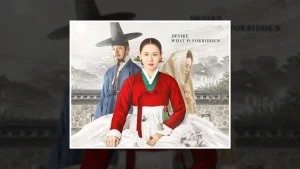

The Scandal Ending Explained: Does Cho-won Die & What Happens to Lady Cho?
What Happens To Hui-yeon?
One of the biggest complications in Lady Cho and Cho-won’s scheme comes when everyone begins believing that Hui-yeon has died. After Cho-won persuades her to disappear with him during the night, her absence is interpreted very differently by the people around her. They assume that the devoted widow has ended her life to follow her late husband in death.
That supposed act of devotion quickly turns Hui-yeon into a symbol of female virtue. Her mother-in-law wants her honoured with a memorial gate, creating a serious problem: Hui-yeon is actually alive.
More importantly, Hui-yeon no longer wants to die. Her exposure to Catholic teachings has changed the way she thinks about taking her own life. Her relationship with Cho-won changes her emotionally too. After believing his declarations of love and becoming intimate with him, Hui-yeon finally allows herself to imagine a future in which she chooses life rather than sacrificing herself to society’s expectations.
Does Cho-won Really Love Hui-yeon?
This is where The Scandal makes Cho-won’s story far more complicated than the wager that started everything. What begins as another seduction gradually becomes emotionally real for him. He develops genuine feelings for Hui-yeon and eventually decides that he wants to escape with her.
Cho-won arranges for a ferry that could take them away from Joseon. But the plan painfully mirrors another escape he once imagined years earlier—with Lady Cho.
When Lady Cho was younger, she and Cho-won had planned to run away together rather than allow her to marry Lord Yoo. She ultimately stayed behind after seeing her father’s grief over the limitations imposed on her because she was a woman. Cho-won waited for her, but she never came. That rejection shaped much of the man he later became.
Years later, he is preparing another escape—this time with Hui-yeon. Yet emotionally, he still hasn’t escaped Lady Cho.
Why Doesn’t Cho-won Leave With Hui-yeon?
Hui-yeon eventually goes to Lady Cho’s home because she fears Cho-won could be punished for deceiving the King. She still doesn’t understand how deeply Lady Cho is involved in everything that has happened to her.
When Cho-won arrives, Lady Cho forces the choice that has been hanging over the story: her or Hui-yeon.
And Cho-won fails Hui-yeon.
Despite his feelings for her and despite planning to leave Joseon with her, he cannot completely walk away from Lady Cho. His attachment to Yun is rooted in years of desire, resentment, shared secrets and an imagined life they never got to have together. When finally forced to choose, he cannot simply erase that history.
Hui-yeon is devastated and runs away. Cho-won later finds her and returns the gat she had been using as part of her male disguise. This time, he tells her the truth.
Hui-yeon’s response is important: she does not forgive him and she does not return to him. She chooses to live, but she will live knowing what he did to her. Their separation makes it clear that love cannot magically erase manipulation and betrayal.
How Does The King Discover The Lie?
Lady Cho constructs an official account claiming that Hui-yeon jumped from a cliff into a raging river. The fabricated report appears convincing enough for the King to approve a memorial gate celebrating Hui-yeon’s supposed virtue.
But the deception doesn’t completely fool him.
The King notices that details in the report do not fit other information he has received, particularly regarding the weather surrounding Hui-yeon’s supposed death. He privately confronts Cho-won and makes it clear that he knows the report is false.
Cho-won is consequently cast out of the King’s favour and told that he will no longer be welcome in his presence.
Interestingly, Cho-won doesn’t tell Lady Cho what has really happened. In his letter to her, he lets her believe their scheme succeeded brilliantly. Lady Cho begins celebrating without realising that the person who has shared her secrets, games and desires for years is already slipping permanently out of her life.
Does Cho-won Die In The Scandal?
Yes, the ending strongly presents Cho-won as dead.
After losing Hui-yeon and finally accepting that Lady Cho will never truly choose the life with him that he has wanted for years, Cho-won returns to Mapo port. It is the same place connected to the escape he had planned.
He boards a ferry, but instead of continuing across the water, Cho-won jumps overboard into the darkness.
The ferryman searches for him but finds only Cho-won’s gat floating on the water. The series does not show his body, but everything that follows treats his disappearance as his death.
It is a tragic end for a character who spends much of the story treating other people’s emotions as entertainment, only to discover too late that he cannot escape his own.
What Happens To Lady Cho In The Ending?
Lady Cho survives, but survival is hardly presented as victory.
On the surface, she retains the privileged life she has spent years protecting. She remains Lady Cho, surrounded by the wealth and status that once seemed worth choosing over the uncertain future Cho-won offered her.
But she loses the person who understood the hidden side of her life better than anyone else.
Cho-won wasn’t merely her cousin or partner in manipulation. He was also her confidant, her connection to a different version of herself and the person through whom her writing could reach beyond the restrictions surrounding her.
By the end, she continues writing letters to a man who will never read them.
The final image of Lady Cho alone at her writing table therefore turns her apparent victory into punishment. She still has her position, her home and her social identity—but the one person around whom so much of her emotional life revolved is gone.
What Happens To Hui-yeon After Cho-won’s Death?
Hui-yeon survives, but she cannot simply return to her previous existence because society believes she is dead. She continues practising her Catholic faith secretly and is forced to remain hidden from people who once knew her.
At one point, she even has to avoid Eun-sil, her former servant, because revealing herself would destroy the carefully maintained story surrounding her supposed death.
Hui-yeon eventually visits Cho-won’s former home, where she discovers that Lady Cho has continued sending him letters. Cho-won’s servant offers her comfort and invites her inside, remembering what Cho-won would have wanted.
There is no romantic reunion waiting for Hui-yeon. Her ending is instead about survival. She has been betrayed and pushed outside respectable society, but unlike the woman everyone believed had died for virtue, she chooses to keep living.
What Happens To So-ok And In-ho?
So-ok gets one of the comparatively lighter endings, although even hers comes with uncertainty.
She becomes Lord Yoo’s concubine while continuing her relationship with In-ho. When she becomes pregnant, the implication is that In-ho—not Lord Yoo—is the baby’s father.
For the moment, So-ok appears happy. But her position remains precarious. In-ho cannot openly claim the child, while So-ok remains part of Lady Cho’s household. The finale therefore leaves a question hanging over how long their secret arrangement can survive.
What Happens To Chil-seong And Eun-sil?
Ironically, two characters with far less social power receive one of the ending’s clearest glimpses of happiness.
Before his death, Cho-won pays for the freedom of Chil-seong and Eun-sil. The two former servants, who fell in love while serving their respective masters, eventually build a life together.
By the finale, they have a baby and a stable livelihood.
The contrast feels deliberate. While the aristocratic characters spend the series using status, desire and other people’s lives as pieces in their private games, Chil-seong and Eun-sil find something far simpler: freedom, family and an ordinary life together.
What Does The Pansori In The Ending Mean?
The finale also reveals an interesting layer to the narration heard throughout the series. The pansori storytelling isn’t merely something added for the audience. Lady Cho and members of her household actually listen to a performer recounting events that closely resemble their own lives, only disguised as fiction.
That means their scandal is effectively becoming a story inside the world of the series.
It is particularly fitting given the origins of The Scandal. The drama reimagines Les Liaisons dangereuses, Pierre Choderlos de Laclos’ 18th-century French novel about privileged people manipulating others while documenting their schemes through letters.
By turning Lady Cho and Cho-won’s behaviour into public storytelling, the ending suggests that the powerful may control people for a while—but they cannot necessarily control how their actions will eventually be remembered.
The Scandal Ending Explained: What Does It Really Mean?
At its heart, The Scandal ending is less about who wins the romantic triangle and more about the consequences of treating people as instruments for entertainment, desire or social advancement.
Lady Cho and Cho-won begin with extraordinary privilege. They have education, wealth, status and enough freedom to interfere in other people’s lives without immediately suffering the consequences. Yet neither is truly free.
Lady Cho sacrificed the life she once wanted in order to remain within the system that gave her status but restricted her because she was a woman. Cho-won responds to his old heartbreak by becoming reckless with other people’s emotions. Hui-yeon is trapped by an ideal of widowhood so extreme that society is prepared to celebrate her supposed death as proof of virtue.
The finale dismantles all three illusions.
Hui-yeon rejects the expectation that she must die. Cho-won discovers that neither seduction nor privilege can repair the emptiness created by his choices. Lady Cho gets to keep the respectable life she once chose, only to discover how lonely that victory can be.
Perhaps the sharpest contrast comes from Chil-seong and Eun-sil. They possess far less wealth and status than the aristocrats, yet once freed, they manage to create the kind of ordinary happiness that repeatedly escapes the show’s privileged characters.
Also Watch: 15 Addictive Shows like The Scandal You Can’t Miss
That is what makes The Scandal‘s ending so bitter. Lady Cho technically keeps almost everything society taught her to value, Hui-yeon survives, and Cho-won’s schemes are finally over. Yet nobody at the centre of the game truly wins. The people who spent so much time controlling other lives ultimately discover that privilege could give them power—but it could not give them freedom, love or happiness.