
Ranabaali Ending Explained: Major Spoilers Alert! Vijay Deverakonda’s Ranabaali is more than a story about a fearless warrior fighting British rule. Set against the devastating Great Madras Famine of 1876–1878, the Telugu period action drama combines historical suffering, an emotional love story, betrayal, and a mysterious prophecy. What begins as one man’s battle to protect his people eventually takes an unexpected supernatural turn.
Directed by Rahul Sankrityan, Ranabaali stars Vijay Deverakonda as Singanamala Bobbili Ranabaali, Rashmika Mandanna as his wife Jayamma, and Arnold Vosloo as the ruthless British officer Sir Theodore Hector. After its theatrical release on October 16, 2026, the film arrived on Netflix on November 13, 2026.
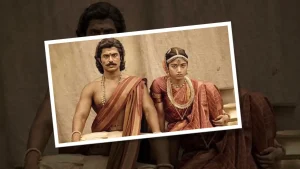
Ranabaali Ending Explained: Does Ranabaali Become a God? What Happens to Jayamma and Hector?
But the biggest questions emerge during the dramatic final act. How does Ranabaali return after being buried? Is he actually a god? Who betrays him? And does Jayamma survive? Let’s explore the film’s ending and the meaning behind its mysterious final scenes.
Spoilers Ahead!
What Happens in Ranabaali?
The story unfolds in Rayalaseema during a period when famine and colonial exploitation have pushed ordinary villagers towards desperation. As crops fail and food becomes increasingly scarce, British authorities continue collecting revenue and transporting grain away from the suffering region.
At the centre of this crisis is Ranabaali, a powerful local chieftain whose life has been surrounded by mystery since his birth.
According to a prophecy, Ranabaali has entered the world to fulfil a particular purpose. His grandfather, Bhadra Mallanna Swamy Thatha, an extraordinary figure associated with protecting the village for generations, declares that the boy’s existence is tied to this mission. Once his purpose is accomplished, his life as an ordinary man will come to an end.
As Ranabaali grows older, he becomes a remarkable fighter and horseman. Although he is fiercely protective of his people, his personal life takes an unexpected turn when his mother arranges his marriage to Jayamma.
Their relationship initially lacks the warmth of a traditional love story. Ranabaali is a man accustomed to confrontation, and Jayamma struggles to understand his distant personality. Gradually, however, their marriage develops into a meaningful emotional bond.
Jayamma discovers the caring man beneath his intimidating exterior. For Ranabaali, she represents the possibility of a peaceful family life, something his destiny may never allow him to experience fully.
Unfortunately, the worsening famine leaves little room for happiness.
When Ranabaali witnesses villagers struggling to survive while grain continues to be exported under British supervision, he refuses to remain silent. His resistance begins locally but gradually develops into an organised movement against colonial exploitation.
His greatest enemy soon emerges in the form of Sir Theodore Hector.
Why Does Ranabaali Fight Sir Theodore Hector?
Hector represents the cruelty of an administration that values revenue and control over human survival.
Despite widespread hunger, he continues enforcing policies that allow grain to leave the famine-stricken region. The suffering of local families does little to change his approach.
Ranabaali realises that protecting his people requires more than distributing whatever food remains. He must directly challenge the system responsible for deepening their misery.
He begins gathering supporters and disrupting British-controlled grain supplies. His courage transforms him into a symbol of resistance, giving villagers hope at a time when they have almost none left.
As the rebellion gains strength, Hector becomes determined to eliminate its leader.
Their conflict eventually turns physical. During one confrontation, Ranabaali seriously wounds Hector and seemingly drowns him in the sea.
For a brief moment, it appears that the British officer’s reign of terror has ended.
However, Hector survives, and his return sets the stage for a devastating betrayal.
Who Betrays Ranabaali and How Does Hector Survive?
One of the most important twists involves a local accountant who discovers Hector alive after his confrontation with Ranabaali.
Instead of helping the villagers fighting for survival, the accountant recognises an opportunity to improve his position under British rule.
He agrees to support Hector in exchange for personal advancement.
The betrayal becomes particularly painful because it comes from someone familiar with the local community. Hector may represent an outside enemy, but the accountant demonstrates how greed can weaken resistance from within.
Together, they arrange an ambush designed to exploit Ranabaali’s attachments.
The accountant uses Ranabaali’s horse to lure him into an isolated location. When the warrior arrives, several attackers surround him.
During the attack, Ranabaali is pierced by a spear and suffers what appears to be a fatal wound.
As he lies helpless, the accountant reveals his arrangement with Hector, making it clear that the attack was deliberately planned.
The villagers subsequently discover Ranabaali’s body. Believing their protector has died, they mourn his loss and bury him.
It seems that Hector has finally succeeded in destroying the man who challenged British authority.
But Ranabaali’s story is not finished.
What Happens to Jayamma? Does She Die?
Jayamma’s fate forms one of the most heartbreaking parts of Ranabaali.
As Ranabaali’s rebellion grows, Hector realises that eliminating the warrior alone may not be enough to crush the villagers’ resistance. He orders a violent assault against the settlement, placing Ranabaali’s family and supporters in terrible danger.
During the attack, Jayamma suffers severe injuries.
What makes the situation even more tragic is that she is pregnant with Ranabaali’s child.
Understanding the seriousness of her injuries, Jayamma asks her husband to save their unborn baby.
Ranabaali faces an impossible emotional moment. The man who has repeatedly fought to protect entire communities cannot save the woman who has become the centre of his personal happiness.
He follows Jayamma’s wishes and saves their child.
Jayamma dies from her injuries, but the baby survives.
Ranabaali’s mother subsequently takes responsibility for the child, ensuring that the family has a future despite its devastating losses.
Jayamma’s death also gives the prophecy a more painful meaning.
From the beginning, Ranabaali’s destiny has been connected to sacrifice. His marriage offered him a chance at ordinary happiness, but the larger struggle against colonial oppression gradually takes everything away from him.
The surviving child becomes an important symbol of hope and continuity. While Jayamma’s life ends tragically, her love and Ranabaali’s family legacy continue through their baby.
Ranabaali Ending Explained: How Does He Return After His Death?
The film’s biggest mystery begins when Hector visits Ranabaali’s burial site.
Confident that his enemy has been defeated, the British officer celebrates his apparent victory. However, he wants absolute confirmation that the rebel leader is dead.
Hector orders his men to dig up the grave.
What they discover is extraordinary.
Ranabaali’s grave is empty.
Instead of finding his body, the soldiers discover a tunnel beneath the burial site.
This revelation changes the meaning of everything the audience has witnessed.
The narrative then connects the burial ground to the caves associated with Ranabaali’s grandfather, Bhadra Mallanna Swamy Thatha.
Earlier in the story, the grandfather was introduced as a mysterious guardian whose existence extended far beyond an ordinary human lifespan. His connection to the village, the surrounding landscape, and the prophecy suggested that supernatural forces were involved in Ranabaali’s birth.
The underground passage now brings those mysterious elements together.
It suggests that Ranabaali’s apparent death may have been part of a much larger transformation.
Before Hector can understand what has happened, Ranabaali makes a terrifying return.
But the figure who emerges no longer appears to be the same warrior.
Why Does Ranabaali Perform the Strange Ritual Dance?
Ranabaali’s final appearance marks the film’s dramatic shift from historical action to supernatural folklore.
He returns covered in blood, carrying a dead hen in his mouth, and begins performing an intense ritualistic dance.
The disturbing imagery is deliberate.
Rather than presenting his return as an ordinary escape from death, the film uses traditional spiritual symbolism to suggest possession, divine power, or a transformation beyond normal human understanding.
His movements and frightening appearance leave the surrounding villagers and British soldiers stunned.
Hector, who believed he had permanently defeated his enemy, suddenly finds himself confronting something he cannot explain.
The scene also recalls the supernatural importance of Ranabaali’s grandfather.
For generations, Bhadra Mallanna Swamy Thatha was believed to protect the village against extraordinary dangers. The final ritual suggests that Ranabaali may now be inheriting this sacred responsibility.
His earlier identity as a human rebel appears to be giving way to something connected with the village’s ancient beliefs.
However, the film deliberately avoids providing a clear explanation of how the transformation occurs.
The audience is left to interpret whether the ritual represents divine possession, a supernatural rebirth, or the symbolic emergence of a legendary protector.
Does Ranabaali Kill Hector in the Ending?
Yes. Hector finally meets his end during Ranabaali’s supernatural return.
The British officer has survived an earlier confrontation, organised a conspiracy, and celebrated the apparent death of his greatest enemy.
Yet his final encounter with Ranabaali is completely different.
The warrior no longer behaves like someone fighting an ordinary battle. His ritualistic appearance and movements suggest that he has crossed into a new state of existence.
As Hector struggles to comprehend what is happening, Ranabaali attacks him and cuts his throat.
Hector dies, bringing his personal campaign of terror against Ranabaali and the village to an end.
The moment carries significance beyond revenge.
Throughout the story, Hector has treated the villagers as powerless people whose suffering can be ignored. Ranabaali’s return destroys that illusion of complete colonial control.
The man Hector thought he could erase has become the very force that ends his reign.
However, the film doesn’t conclude with Ranabaali celebrating his victory or returning to his family.
Instead, he climbs onto his horse and rides away.
His departure creates the final mystery.
Does Ranabaali Become a God in the Ending?
Ranabaali strongly suggests a divine transformation, but it never explicitly confirms that its protagonist has literally become a god.
Several details support the supernatural interpretation.
First, the prophecy surrounding his birth establishes that Ranabaali’s life has a predetermined purpose. His grandfather announces that he will remain in the world only until that mission is completed.
Second, the grandfather himself is presented as an extraordinary guardian who has protected the village across generations.
Third, Ranabaali’s disappearance from the grave and his subsequent ritualistic return suggest an experience that goes beyond ordinary survival.
Finally, his behaviour after killing Hector is unlike that of a victorious human warrior.
He does not seek recognition, reunite with his mother, or attempt to reclaim his previous life. He simply leaves.
This departure suggests that his original purpose has been fulfilled and that he may now occupy the same mysterious position once held by his grandfather.
The most compelling interpretation is that Ranabaali transforms from a mortal protector into a legendary guardian of the land.
Yet another possibility remains.
The tunnel beneath his grave indicates that his disappearance may have a physical explanation. The film leaves room for the idea that he survives his injuries and returns in a ritualistic state associated with local spiritual traditions.
By refusing to settle the question completely, the ending allows Ranabaali to exist between history and mythology.
Whether audiences understand him as a divine being, a chosen warrior, or a man whose legend grows beyond his lifetime, his transformation represents the continuing spirit of resistance.
Why Does Ranabaali Leave His Mother and Child Behind?
One of the most emotional details in the conclusion is Ranabaali’s decision to leave without returning to his surviving family.
After losing Jayamma, he still has a child who needs him and a mother who has spent years worrying about his destiny.
Yet the film does not show him embracing either of them after defeating Hector.
His departure is closely connected to the prophecy.
Ranabaali was never promised an ordinary life. His grandfather had warned that his existence would be defined by a particular mission.
With Hector defeated, that mission reaches its conclusion.
The final scenes suggest that Ranabaali’s responsibilities are no longer limited to his individual family. His transformation places him within a larger spiritual tradition associated with protecting the region.
His mother appears to understand this change.
Although she has lost the possibility of living with her son as an ordinary family, she recognises that his destiny has taken him somewhere beyond human expectations.
Meanwhile, his surviving child provides a continuation of the family he leaves behind.
The ending therefore separates Ranabaali’s legacy into two parts: his child carries forward his human lineage, while his legendary identity continues through the people and land he protected.
What Is the Real Meaning of Ranabaali’s Ending?
The conclusion of Ranabaali brings together the film’s central ideas of sacrifice, resistance, faith, and the lasting impact of courageous individuals.
Ranabaali begins as a man destined to accomplish something extraordinary. His journey takes him from local chieftain to rebel leader, and eventually to a figure surrounded by supernatural mystery.
His victory over Hector comes at a terrible personal cost.
He loses Jayamma, nearly loses his own life, and ultimately walks away from the possibility of raising his child.
Yet his sacrifice ensures that his struggle is not forgotten.
The film also uses the famine as more than a historical backdrop. The suffering villagers, grain shipments, and resistance against exploitative policies establish why the community desperately needs someone willing to challenge authority.
The supernatural conclusion takes that need one step further.
By presenting Ranabaali as a possible successor to an ancient guardian, the film suggests that protectors may disappear as individuals while continuing to live through collective memory, folklore, and faith.
His final ride becomes an image of freedom and transformation rather than an ordinary farewell.
Ranabaali may leave his family and village, but his story suggests that a protector’s legacy can survive long after his human journey ends.
Where to Watch Ranabaali on OTT?
Ranabaali is streaming on Netflix from November 13, 2026. The film is available in Telugu, Hindi, Tamil, Kannada, and Malayalam.
Directed by Rahul Sankrityan and produced by Mythri Movie Makers in association with T-Series, the 178-minute period action drama features Vijay Deverakonda, Rashmika Mandanna, Arnold Vosloo, Lal, and Easwari Rao.
Also Watch: 15 New Movies and Shows Released This Week!
For viewers who enjoy historical action films that combine emotional storytelling, folklore, and supernatural mystery, Ranabaali offers an unusual interpretation of sacrifice and heroism.