
I Play Rocky Ending Explained: Major Spoilers Alert! What happens when Hollywood believes in your story but refuses to believe in you? That is the heartbreaking question at the centre of I Play Rocky (2026). Directed by Peter Farrelly and starring Anthony Ippolito as a young Sylvester Stallone, the film brings us the incredible journey behind one of cinema’s most iconic characters. Before Rocky Balboa became a symbol of courage, the man who created him was struggling to pay his bills, facing constant rejection and fighting for one opportunity that could change his life.
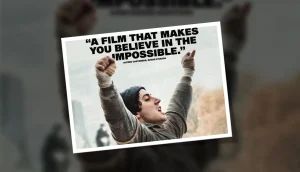
But the biggest surprise of I Play Rocky is how closely Stallone’s own journey mirrors the fictional boxer he created. Both men are underestimated, both face almost impossible odds, and neither is willing to walk away without giving everything. So, how does Stallone finally convince Hollywood to let him play Rocky? What happens during the difficult production? And why does the film’s final scene carry such an emotional meaning? Here’s our complete I Play Rocky ending explained breakdown.
Major Spoilers Alert!
I Play Rocky Ending Explained: Does Stallone Finally Get His Big Break?
Yes! After years of watching opportunities slip away, Sylvester Stallone finally gets the chance he has been desperately chasing. But his victory comes at an enormous personal cost.
By the final act, Stallone has convinced producers Robert Chartoff and Irwin Winkler that his screenplay deserves to become a movie. The problem is that Hollywood wants someone more famous to play the lead. Stallone refuses to accept that condition, even though selling the script could solve his financial problems almost immediately.
Eventually, the producers secure a deal that allows him to portray Rocky Balboa. However, the production has a tight budget and an unforgiving schedule. Stallone must prove that he deserves the opportunity without giving the studio any reason to replace him.
Despite injuries, illness and pressure from almost every direction, Stallone completes the movie. His gamble pays off when Rocky becomes a remarkable success and goes on to win major Academy Awards.
Yet the most beautiful part of I Play Rocky is that its emotional ending doesn’t depend on showing a glamorous Hollywood celebration. Instead, the film brings us back to one unforgettable image: Rocky running up the Philadelphia steps. For Stallone, that moment represents something much bigger than the success of a movie.
Why Does Stallone Refuse to Sell His Rocky Script?
Imagine struggling to afford groceries and suddenly being offered enough money to change your life. Most people would find it impossible to refuse. But Stallone does exactly that.
After being inspired by a boxing match between Muhammad Ali and underdog Chuck Wepner, Stallone writes a screenplay about a small-time fighter who receives an unexpected opportunity to challenge a world champion.
When Chartoff and Winkler read the screenplay, they immediately recognise its potential. There is just one major disagreement. They want to make the film with an established Hollywood star, while Stallone insists that he must play Rocky himself.
As the financial offers grow, the decision becomes increasingly painful. Stallone and his wife, Sasha, desperately need money. Accepting the deal would bring them relief, but it would also mean surrendering the opportunity Stallone has spent years trying to create.
What makes this conflict so powerful is that Stallone isn’t simply fighting for an acting credit. He sees himself in Rocky Balboa. Both are men the world has already judged without giving them a proper chance.
For Stallone, selling Rocky without playing him would feel like admitting that everyone who doubted him was right. He would rather risk losing the entire project than give up the dream that inspired him to write it.
How Does Sasha Help Stallone Change His Life?
While Stallone’s determination drives the story, Sasha Czack, played by AnnaSophia Robb, becomes one of its most important emotional anchors.
When the couple first meet, Stallone is an aspiring actor with little stability and even fewer opportunities. He has spent years trying to convince casting directors to take him seriously. Sasha sees something beyond his unsuccessful auditions. She recognises his creativity, ambition and desire to tell stories.
Instead of encouraging him to wait for someone to offer him a meaningful role, she pushes him to write his own material. It is a simple suggestion, but it changes the direction of his life.
Sasha also witnesses the painful relationship between Stallone and his father, Frank, who repeatedly questions his abilities. Where his father sees disappointment, Sasha sees possibilities.
As their financial troubles become more serious, her support remains important. The film doesn’t suggest that believing in someone magically makes their problems disappear. Instead, it shows how much courage a person can find when even one individual refuses to give up on them.
And that makes Stallone’s eventual success feel like more than a professional achievement. It is also a reward for the faith Sasha placed in him when success seemed almost impossible.
Why Does Stallone Sell His Beloved Dog Butkus?
One of the most emotional moments in I Play Rocky has nothing to do with a film studio or a boxing ring. It involves Stallone’s dog, Butkus.
During his early struggles, Stallone finds an abandoned puppy and takes him home. Butkus becomes a loyal companion during a period when almost everything else in Stallone’s life feels uncertain.
However, when his financial situation becomes desperate, Stallone makes the painful decision to sell Butkus so that he can afford food.
The moment reveals just how difficult his circumstances have become. He isn’t an actor refusing ordinary opportunities because he thinks he deserves fame. He is a man whose dream has pushed him to the edge of losing everything he loves.
Thankfully, the story comes full circle. Once Stallone receives payment for Rocky, he searches for the man who bought Butkus and manages to bring his beloved dog home.
This reunion becomes a small but meaningful victory. Long before the world recognises Stallone’s talent, he finally has enough money to recover something precious that poverty forced him to surrender.
What Happens During the Making of Rocky?
Getting the lead role should have been the end of Stallone’s struggle. Instead, it begins an entirely new battle.
With John G. Avildsen directing, Rocky goes into production under extraordinary financial pressure. The team has limited resources, little time and almost no room for mistakes.
Even though Stallone has won the right to play the character, his position remains vulnerable. Any serious delay could put his role at risk.
Things become worse when the actor suffers physical injuries and falls ill during filming. But rather than allowing those setbacks to stop him, Stallone keeps pushing forward.
Meanwhile, the filmmakers must find creative solutions to problems that larger productions could easily solve with money. Shooting in Philadelphia becomes an important part of bringing the story to life, and the city’s streets eventually give Rocky its unforgettable identity.
There is something wonderfully ironic about these scenes. The fictional Rocky is training to survive a fight against a seemingly unbeatable champion, while the real Stallone is working just as hard to keep his movie alive.
Why Is Rocky’s Confrontation With Mickey So Important?
One of the film’s most revealing moments arrives when Stallone struggles to deliver an emotionally convincing scene between Rocky and his trainer, Mickey.
Director Avildsen knows that the movie needs something deeper than an inspiring boxing story. Audiences must understand Rocky’s loneliness, disappointment and longing to be valued.
That emotional connection finally arrives when Stallone draws upon his own painful experiences with his father.
Throughout I Play Rocky, Frank Stallone Sr., played by Matt Dillon, has repeatedly undermined his son’s confidence. His harsh words leave Stallone carrying years of frustration and resentment.
While performing Rocky’s confrontation with Mickey, Stallone transforms those feelings into an emotionally charged improvised speech.
Suddenly, the scene becomes more than an argument between a boxer and his trainer. It feels like a lifetime of rejection finally finding a voice.
This is the moment when Stallone’s personal struggles become the emotional strength of Rocky Balboa. Everything he once wished he could forget now helps him deliver the performance that the film needs.
I Play Rocky Final Scene Explained: Why Does the Movie End on the Philadelphia Steps?
The final sequence of I Play Rocky brings the story to its emotional peak by recreating one of the most famous moments from the original Rocky: Stallone’s character running up the steps of the Philadelphia Museum of Art.
On the surface, it is a familiar training sequence. Rocky is preparing for his upcoming championship fight, pushing his body beyond his limits and proving that he has the determination to keep going.
But after watching everything Stallone has endured, the scene takes on a completely different meaning.
Every step now feels like another rejection he has overcome. Every movement represents the sacrifices he has made. And when Rocky finally reaches the top, it feels as though Stallone himself has finally climbed out of years of uncertainty.
The beauty of this ending lies in what it chooses not to show. Stallone doesn’t need to stand on an awards stage or hear a powerful producer announce that he has become a star. The audience already knows what he has achieved.
The film recreates the famous training moment from Rocky, allowing the character’s achievement to represent Stallone’s own journey. The recreated boxing action appears during the end credits, while the staircase sequence provides the main story’s emotional conclusion.
And that choice makes perfect sense. Stallone’s biggest victory was never simply becoming famous. It was reaching a place where nobody could take away the opportunity he had fought so hard to earn.
Does Rocky Become a Successful Movie in the End?
Absolutely! Despite its modest budget and the doubts surrounding its leading actor, Rocky becomes one of the defining films of its generation.
Released in 1976, the movie connects with audiences who recognise something of themselves in its unlikely hero. Rocky Balboa may be a boxer, but his story is about a universal desire: to be given a chance and prove that you deserve it.
The film goes on to win three Academy Awards, including Best Picture and Best Director for John G. Avildsen. Stallone also receives Oscar nominations for both acting and writing.
For someone who once struggled to convince Hollywood that he belonged in front of a camera, the transformation is extraordinary.
But perhaps the most satisfying aspect of his success is that he achieves it without abandoning the character he created. Had Stallone accepted the producers’ earlier offers, Rocky might still have become a movie, but his own life could have followed a completely different path.
Is I Play Rocky Based on a True Story?
Yes. I Play Rocky is inspired by Sylvester Stallone’s real-life struggle to write and star in the 1976 film Rocky.
The central events are rooted in Hollywood history, including Stallone’s financial difficulties, his refusal to sell the screenplay without securing the lead role, the challenges of producing the movie on a small budget and its eventual Academy Award success.
The Muhammad Ali and Chuck Wepner fight was also a genuine source of inspiration. In their 1975 encounter, Wepner surprised spectators by remaining competitive far longer than expected, although Ali ultimately stopped him in the final round.
However, I Play Rocky is a dramatised biographical movie rather than a documentary. Some conversations, personal moments and timelines are presented through a cinematic interpretation of events.
Its larger message, though, remains closely connected to the real story: Stallone believed in a character that Hollywood initially refused to trust him to portray, and his persistence transformed his career.
What Is the Real Meaning of I Play Rocky’s Ending?
At its heart, I Play Rocky is about the difference between achieving success and being allowed to pursue success on your own terms.
Stallone could have taken the money. He could have let a famous actor become Rocky Balboa. He could have accepted the industry’s judgment that he wasn’t ready for a leading role.
But he chose a much harder path because the opportunity mattered more to him than the immediate reward.
The film also makes an important point about where great stories come from. Rocky Balboa’s pain, determination and desire for respect aren’t simply clever inventions. They reflect the feelings of the struggling actor who wrote him.
That is why the final staircase sequence feels so rewarding. The character on screen and the man behind him are finally celebrating the same victory.
In the end, I Play Rocky reminds us that sometimes the most powerful underdog story isn’t the one Hollywood puts on screen. It’s the story of the person who fought to bring it there.