
If Main Vaapas Aaunga moved you with its story of love, Partition, separation and the deep desire to return to a place that still feels like home, there are several other Indian movies that explore similar emotions. Some follow lovers divided by the India-Pakistan border, while others look at families uprooted during Partition and people who continue carrying memories of their old homes decades later. From Veer-Zaara and Pinjar to Sardar Ka Grandson, here are 10 movies like Main Vaapas Aaunga that explore love, loss, borders, displacement and the powerful pull of home.
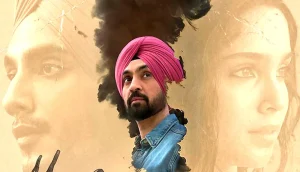
10 Movies Like Main Vaapas Aaunga You Can’t Miss
1. Veer-Zaara
Squadron Leader Veer Pratap Singh (Shah Rukh Khan), an Indian Air Force pilot, meets Zaara Hayaat Khan (Preity Zinta), a Pakistani woman visiting India, and falls deeply in love with her. But their dream of being together collapses when Veer travels to Pakistan and is falsely accused of being an Indian spy. He spends more than two decades in prison without revealing the truth that could damage Zaara’s reputation. Years later, lawyer Saamiya Siddiqui (Rani Mukerji) discovers his forgotten case and sets out to uncover what really happened. Among movies like Main Vaapas Aaunga, Veer-Zaara is perhaps the closest match, bringing together cross-border love, decades of separation, sacrifice, memories and an emotional reunion.
2. Pinjar
Set around the Partition of India, Pinjar follows Puro (Urmila Matondkar), a young Hindu woman whose life changes when Rashid (Manoj Bajpayee) kidnaps her because of an old feud between their families. Puro manages to escape, but instead of welcoming her home, her family refuses to accept her because they fear social disgrace. Forced into a completely different life, Puro finds herself caught between the family she lost, the man who abducted her and a country being torn apart around her. As Partition unleashes violence and mass migration, her personal tragedy becomes part of a much larger human crisis. Its themes of displacement, identity and people losing their homes make Pinjar one of the strongest movies to watch after Main Vaapas Aaunga.
3. 1947: Earth
Deepa Mehta’s 1947: Earth takes viewers into Lahore just as Partition begins destroying relationships that once seemed unbreakable. The story unfolds largely around Shanta (Nandita Das), a Hindu nanny loved by two Muslim men — Hasan (Rahul Khanna) and Dil Navaz (Aamir Khan). Their group of Hindu, Muslim and Sikh friends initially appears untouched by the political tensions outside, but communal violence gradually enters their lives. Love turns into jealousy, friendships collapse and ordinary people become victims of the hatred spreading across the city. Rather than treating Partition only as a historical event, the movie shows what happened when borders entered people’s homes and relationships. That makes it an essential addition to a list of movies like Main Vaapas Aaunga.
4. Sardar Ka Grandson
Amreek (Arjun Kapoor) is determined to fulfil the final wish of his grandmother Sardar (Neena Gupta), who wants to return to the Lahore home she was forced to leave during Partition. But taking her across the India-Pakistan border proves difficult, so Amreek comes up with an extraordinary alternative — if his grandmother cannot go back to her house, he will try to bring the house to her. Beneath the movie’s lighter and more humorous treatment is an emotional story about displacement and how a home can remain alive in someone’s memories even after decades. Flashbacks involving the younger Sardar (Aditi Rao Hydari) and her husband Gursher (John Abraham) add another layer of Partition-era love and loss. The longing to return home makes this particularly close to Main Vaapas Aaunga.
5. Chhalia
Set against the aftermath of Partition, Chhalia follows Shanti (Nutan), who is separated from her husband Kewal when violence forces millions of people to flee across the newly created India-Pakistan border. Years later, Shanti finally reaches India with her young son, hoping she can return to her husband and rebuild the life she lost. Instead, she faces rejection and suspicion because she spent those missing years in Pakistan. Raj Kapoor’s Chhalia enters her life at her most vulnerable and develops feelings for her, but Shanti continues longing for her family. Released in 1960, the film remains striking for the way it explores people returning from Partition only to discover that the home and relationships they remembered have changed forever.
6. Sita Ramam
Lieutenant Ram (Dulquer Salmaan), an Indian Army officer stationed in Kashmir, begins receiving letters from an unknown woman calling herself Sita Mahalakshmi (Mrunal Thakur). Curious about the woman behind the letters, Ram sets out to find her, beginning a sweeping romance shaped by secrets, distance and military duty. But circumstances eventually separate them, leaving behind a letter that remains undelivered for years. Decades later, Afreen (Rashmika Mandanna) is tasked with taking that letter to its intended recipient and gradually uncovers the truth about Ram and Sita’s unfinished story. Though it is not centred on Partition, the Hindi-dubbed romantic drama fits beautifully among movies like Main Vaapas Aaunga because of its themes of borders, waiting, sacrifice, lost time and love surviving through memories.
7. Gadar: Ek Prem Katha
Against the violent backdrop of the 1947 Partition, Tara Singh (Sunny Deol) saves Sakina (Ameesha Patel), a Muslim woman separated from her family during the chaos. Their relationship slowly turns into love, and the two marry and begin building a family in India. Years later, Sakina learns that her parents survived and are living in Pakistan. She travels to meet them, but her powerful father refuses to allow her to return to Tara and their son. Tara then crosses into Pakistan in an attempt to reunite his family. While Gadar is considerably more action-heavy than Main Vaapas Aaunga, its emotional foundation is remarkably similar: Partition creates a border, the border separates loved ones, and people risk everything to find their way back to each other.
8. Henna
Chander (Rishi Kapoor) is preparing to marry his childhood sweetheart when an accident sends his vehicle into a river. The current carries him across the border into Pakistan, where he is rescued by Henna (Zeba Bakhtiar). Chander has lost his memory, and Henna and her family care for him while he tries to understand who he is. Henna gradually falls in love with him, but everything changes once his memories of India and the woman waiting for him begin returning. His nationality also makes him a target of suspicion, turning his journey home into something dangerous. Henna is one of the better choices for viewers searching for movies like Main Vaapas Aaunga, combining India-Pakistan borders, romance, separation, identity and painful sacrifice.
9. Train to Pakistan
Based on Khushwant Singh’s celebrated novel, Train to Pakistan is set in Mano Majra, a small Punjab village where Sikhs and Muslims have lived together peacefully for generations. Partition initially feels distant from their everyday lives, but everything changes when trains carrying the bodies of people killed during communal violence begin arriving. Fear and revenge slowly spread through the village, putting its Muslim residents in danger. At the centre is Jugga, a Sikh man in love with Muslim woman Nooran. When a plan emerges to massacre Muslim refugees travelling to Pakistan, Jugga faces a choice that could cost him everything. This is a darker entry among movies like Main Vaapas Aaunga, but few films show the human cost of Partition and forced migration so directly.
10. Mammo
Shyam Benegal’s Mammo tells a quieter but deeply moving story about what happens long after Partition officially ends. Mammo (Farida Jalal) moved to Pakistan following Partition and eventually became a Pakistani citizen. Decades later, after losing her husband, she returns to Bombay to stay with her sister and nephew. For Mammo, India is not simply another country — it is where her family, memories and sense of belonging remain. But visa rules and questions surrounding her citizenship threaten to send her away again. Without relying on a grand romance or dramatic action, Mammo captures something central to Main Vaapas Aaunga: the painful idea that a political border can declare someone a foreigner in a place their heart still considers home.
Some are tragic romances, while others focus on families, migration and the desire to return home. But all of them capture elements that make movies like Main Vaapas Aaunga so moving — love that survives distance, memories that refuse to disappear and people caught between the place where they live and the place they still call home.