
Directed by Jennifer Peedom, Tenzing tells the inspiring true story of Tenzing Norgay, the Himalayan climber who made history alongside Edmund Hillary. Starring Genden Phuntsok, Tom Hiddleston, Willem Dafoe and Caitríona Balfe, the film explores courage, ambition, friendship and the struggle for recognition. But the ending is about much more than reaching the world’s highest peak. Here’s the Tenzing ending explained, including what happens during the final climb and the deeper meaning behind Tenzing’s historic achievement.
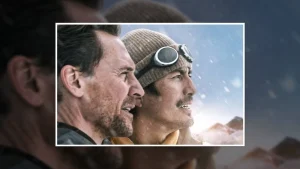
Tenzing Ending Explained: What Happens During the Final Climb?
The film builds towards the historic 1953 expedition to Mount Everest, where Tenzing Norgay (Genden Phuntsok) and Edmund Hillary (Tom Hiddleston) attempt what no climbers had successfully achieved before them: reaching the world’s highest summit.
However, Tenzing’s journey begins long before the final climb. Through flashbacks to his childhood and younger years, the movie shows how his connection with the mountains shaped his ambitions.
Despite his experience, Tenzing initially struggles to receive the recognition he deserves. While British climbers are treated as the expedition’s leading figures, Sherpas are largely expected to provide support.
Encouraged by his wife Dawa (Thinley Lhamo), Tenzing refuses to accept a supporting role. With help from expedition secretary Jill Henderson (Caitríona Balfe), he persuades expedition leader Colonel John Hunt (Willem Dafoe) to recognise him as a fellow climber.
As the expedition progresses, Tenzing and Hillary develop a partnership built on trust. Their different backgrounds and beliefs gradually become less important than their shared determination to survive the dangerous ascent.
The final stretch brings the story to its emotional peak as the two men face the enormous challenge of reaching Everest’s summit.
Does Tenzing Finally Reach Mount Everest’s Summit?
Yes. Tenzing Norgay and Edmund Hillary successfully reach the summit of Mount Everest, completing their historic climb on May 29, 1953.
Their success marks a turning point in mountaineering history. But for Tenzing, the moment carries a meaning beyond breaking a record.
Throughout the film, Hillary and the Western expedition members largely view Everest as a challenge to overcome. Tenzing, however, approaches the mountain with deep respect.
He knows it as Chomolungma, a sacred mountain with spiritual importance in Himalayan culture. Reaching the summit therefore represents not just the fulfilment of his ambition but also a personal and spiritual achievement.
The ending brings these different perspectives together. Although Tenzing and Hillary arrive with different motivations, they achieve something extraordinary through cooperation and mutual respect.
Why Does Tenzing’s Relationship With Hillary Change?
One of the film’s important emotional developments is the growing friendship between Tenzing and Hillary.
Initially, the two men come from very different worlds. Hillary is a New Zealand mountaineer working within a British-led expedition, while Tenzing must fight to be recognised as more than an experienced Sherpa supporting the team.
Their differences reflect the larger inequalities surrounding the expedition.
However, climbing Everest forces them to depend on each other. At such extreme heights, titles, nationality and social standing become less important than experience, courage and trust.
By the time they reach the summit, their relationship has become a partnership between equals.
Rather than presenting Hillary as Tenzing’s enemy, the film suggests their success would not have been possible without their shared determination.
Did Edmund Hillary Take All the Credit for Reaching Everest?
The film raises an important question about how history remembers extraordinary achievements.
Although Tenzing and Hillary reached Everest’s summit together, Hillary became the more internationally celebrated figure, while Tenzing’s contribution was often given less attention.
Tenzing challenges that imbalance by telling the story from Norgay’s perspective.
However, the movie does not simply portray Hillary as someone trying to steal Tenzing’s achievement. Instead, it explores how social status, colonial attitudes and unequal recognition influenced whose stories received the most attention.
By placing Tenzing at the centre, the film reminds viewers that he was not merely helping another man achieve greatness. He was making history himself.
What Does the Ending of Tenzing Really Mean?
The deeper meaning of Tenzing lies in the difference between conquering a mountain and respecting it.
For many members of the expedition, reaching Everest’s summit represents human achievement and national pride. For Tenzing, the mountain has always held a more personal significance.
His reverence for Chomolungma shapes the way he approaches the climb. He does not simply want to defeat nature or prove himself better than others.
Instead, his journey represents a lifelong connection to the mountains, his cultural identity and his determination to be seen as an equal.
This makes the ending especially meaningful. The summit is not only the destination of a dangerous expedition. It is also the moment when Tenzing proves that his contribution deserves the same recognition as Hillary’s.
The film’s central message is that greatness is not determined by fame, nationality or social position. It comes from courage, perseverance, respect and the willingness to trust others.
Is Tenzing Based on a True Story?
Yes, Tenzing is inspired by the real life of Tenzing Norgay, who became one of the first two people confirmed to have reached Mount Everest’s summit alongside Edmund Hillary on May 29, 1953.
The expedition was led by British mountaineer John Hunt, and the achievement became one of the most celebrated milestones in climbing history.
While the film dramatises parts of Tenzing’s personal life and relationships, its central historical event is real.
By exploring his childhood, family support, struggles and spiritual connection with Everest, the film offers a more personal perspective on an achievement that is often told primarily through Hillary’s story.
Final Thoughts: Why Tenzing’s Ending Matters
Tenzing may appear to be a straightforward survival drama about two men climbing Mount Everest, but its message goes much deeper.
The film isn’t simply asking whether Tenzing and Hillary will reach the summit. That part of history is already known. Instead, it asks why one man became a household name while the other’s equally remarkable contribution received less recognition.
By telling the story through Tenzing’s eyes, the movie turns a familiar historical achievement into a moving story about dignity, belonging and determination.
Also Watch: 15 Movies like Tenzing You Can’t Miss
In the end, Tenzing doesn’t just reach the top of the world. He earns the recognition that his extraordinary journey deserves.