
The Mosquito Bowl Ending Explained: Major Spoilers Alert! Netflix’s The Mosquito Bowl is a heartbreaking World War II drama that takes four exceptionally talented football players from packed stadiums to the devastating battlefields of the Pacific. Directed by Peter Berg, the film stars Nicholas Galitzine, Bill Skarsgård, Ray Nicholson and Tom Francis in the lead roles.
Inspired by Buzz Bissinger’s 2022 nonfiction book, the movie follows four young men who abandon their promising sporting careers to serve their country. What begins as a story of ambition, competition and friendship gradually becomes an emotional exploration of sacrifice and survival.
The Mosquito Bowl Ending Explained: Who Survives the War? What Happens to John, Bob, Tony and Dave?
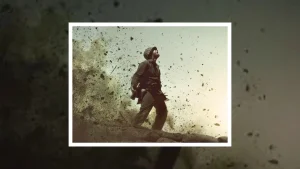
The film’s final moments are particularly heartbreaking as the four friends face dramatically different fates. So, who survives the Battle of Okinawa? What happens to John, Bob, Tony and Dave? And what is the deeper significance of the football game?
Here’s The Mosquito Bowl ending explained.
Spoilers Ahead!
The Mosquito Bowl Plot: How Four Football Stars End Up Fighting a War
The story introduces us to four talented American college football players: John McLaughry, Bob Bauman, Tony Butkovich and Dave Schreiner.
John plays for Brown University, Bob and Dave represent Wisconsin, while Tony is a celebrated player at Purdue University.
Although their personalities and backgrounds differ, football gives them a shared sense of purpose. They have dreams of successful careers, happy relationships and fulfilling lives.
However, everything changes following the Japanese attack on Pearl Harbor in December 1941.
The four young men put aside their sporting ambitions and enlist in the US Marine Corps. Their journey takes them through demanding military training before they encounter the devastating reality of combat in the Pacific.
Their experiences at Tarawa expose them to a world where the discipline and determination that once helped them succeed on the football field cannot guarantee their survival.
As the war progresses, their relationships become increasingly important. Former sporting rivalries lose their significance as the men confront a much greater challenge together.
Why Do the Marines Organise a Football Game on Guadalcanal?
In December 1944, the Marines are stationed on Guadalcanal, preparing for another major military operation.
Having spent months surrounded by the horrors of war, the soldiers desperately need something to lift their spirits. A rivalry between two Marine regiments eventually leads to a football match on Christmas Eve.
For John, Bob, Tony and Dave, the game offers something far more valuable than victory.
It allows them to temporarily rediscover their former selves. They can laugh, compete, celebrate and experience the happiness that had largely disappeared from their lives.
For the audience, however, the sequence carries an underlying sense of sadness. These young men are enjoying a moment of freedom without knowing how little time some of them have left.
The football game becomes the emotional turning point of the movie.
The Mosquito Bowl Ending Explained: What Happens at Okinawa?
The happiness experienced on Guadalcanal proves short-lived as the Marines return to combat.
The Battle of Okinawa becomes the final and most devastating chapter of the four football players’ journey.
Throughout the movie, the men have relied on their courage, friendship and determination to overcome difficult circumstances. However, the climax demonstrates that even these qualities cannot protect them from the unpredictability of war.
John McLaughry is the only one of the four central characters who survives World War II. Bob Bauman, Tony Butkovich and Dave Schreiner lose their lives during the Okinawa campaign.
The devastating conclusion transforms the football game into a bittersweet memory of their friendship and the futures they once imagined.
What Happens to Tony Butkovich? Does He Die?
Yes, Tony Butkovich, played by Ray Nicholson, does not survive the war.
Tony’s journey is particularly emotional because of how much he had already achieved before becoming a Marine. His sporting abilities had opened the door to a potentially successful professional football career.
His relationship with Dave also undergoes a remarkable transformation. Once competitors on the football field, they eventually develop a profound bond through their shared military experiences.
Director Peter Berg revealed that the movie features an emotional moment of physical closeness between Tony and Dave as they approach death.
The scene captures how completely their former rivalry has disappeared. The connection between them is no longer defined by football but by affection, loyalty and shared suffering.
In real life, Tony died on April 18, 1945, aged just 24. Although the Cleveland Rams had selected him in the 1944 NFL Draft, he never got to pursue that opportunity.
What Happens to Bob Bauman?
Bob Bauman, portrayed by Bill Skarsgård, also dies during the Battle of Okinawa.
Throughout the movie, Bob’s energetic personality provides a contrast to Dave’s more serious and introspective nature.
Their friendship stretches back to their time as college football teammates. Their connection represents one of the strongest emotional relationships in the story.
Bob’s death is particularly painful because the audience has already seen him as someone capable of bringing happiness into difficult situations.
His fate reinforces one of the movie’s central ideas: the qualities that make someone extraordinary in everyday life offer no guarantee of survival during war.
Historically, Bob was killed on June 6, 1945, after having previously been wounded and returning to military service.
Does Dave Schreiner Survive? Why Is His Death So Heartbreaking?
Unfortunately, Dave Schreiner does not survive either.
Played by Tom Francis, Dave is among the most emotionally complex characters in The Mosquito Bowl. Beneath his athletic achievements and sense of responsibility lies a young man with hopes for a life beyond the war.
One of the movie’s most meaningful conversations takes place between Dave and John on a secluded beach. The two discuss having children and the legacy a person might leave behind.
The conversation becomes especially heartbreaking once viewers discover Dave’s fate.
Dave will never experience the ordinary milestones that he hopes for. He will never have the opportunity to build the family or enjoy the future that once seemed possible.
In real life, Dave was engaged to Odette Hendrickson. He suffered fatal injuries on June 20, 1945, and died the following day.
His death gives additional emotional weight to his earlier conversation with John.
What Happens to John McLaughry at the End?
John McLaughry, played by Nicholas Galitzine, is the sole survivor among the four principal characters.
Unlike his friends, John receives the opportunity to return to civilian life and pursue a future beyond military service.
However, his survival does not give the movie a conventional happy ending.
The friendships that shaped his wartime experiences are now memories. His return to normal life comes with the knowledge that three men who once shared similar dreams will never have the same opportunity.
John’s journey can also be interpreted through the lens of survivor’s guilt. His survival raises difficult questions about how someone continues living after witnessing the loss of those closest to him.
In real life, John remained connected to football through a coaching career that included Union College, Amherst and Brown University. He lived until 2007.
His long life stands in painful contrast to the limited years his friends were given.
Why Does The Mosquito Bowl End With Images of the Atomic Bombings?
The movie’s closing montage expands its focus beyond the four football players.
Images associated with Hiroshima and Nagasaki, Japanese survivors, American soldiers returning home and the Statue of Liberty connect their individual experiences to the broader consequences of World War II.
The contrast between destruction and homecoming is particularly significant.
While some families are reunited, countless others must confront irreversible loss. The suffering of Japanese civilians also reminds viewers that the consequences of the conflict extended far beyond military personnel.
Rather than concluding solely with an American military victory, the montage invites audiences to consider what that victory cost.
The ending places the personal tragedy of John and his friends within a much larger historical tragedy.
Why Is the Football Game So Important to the Ending?
The significance of the Mosquito Bowl becomes clearer after learning what happens to the four men.
At the beginning of the movie, football represents opportunity. It is connected to their identities, achievements and ambitions.
During the war, the sport takes on an entirely different meaning.
It becomes a connection to a world where their greatest worries were winning games, impressing their coaches and building successful careers.
The Christmas Eve match allows them to briefly experience that world again.
Knowing that several of the players will never return home makes their happiness during the game even more meaningful.
The tragedy is not merely that these men lose their lives. It is also that they lose everything their lives might have become.
This is why the football sequence remains central to the movie even though the most dramatic events occur later.
Is The Mosquito Bowl’s Ending Based on Real Events?
Yes, the film’s central tragedy is rooted in history.
John McLaughry, Bob Bauman, Tony Butkovich and Dave Schreiner were real football players who served in the US Marine Corps during World War II.
The historic Mosquito Bowl took place on Guadalcanal on December 24, 1944. The actual game ended in a scoreless draw.
However, director Peter Berg has taken creative liberties with certain conversations, encounters and timelines to construct the movie’s narrative.
While not every scene should be interpreted as an exact historical recreation, the ultimate fates of the four central men reflect their real-life outcomes.
The Mosquito Bowl Ending: What Is the Movie’s Real Message?
Ultimately, The Mosquito Bowl is a film about the value of an ordinary human life.
Dave’s desire to have children, Tony’s football ambitions, Bob’s friendships and John’s opportunity to grow old all represent different aspects of the future these young men hoped to experience.
The movie reminds us that the true cost of war cannot be understood simply through military victories or historical statistics. It must also be understood through the relationships, dreams and possibilities that disappear with every life lost.
John survives, but the future he returns to is fundamentally different from the one he imagined before the war.
Also Explore: 15 Movies like Mosquito Bowl You Can’t Miss
And the football game that gives the movie its title becomes something much more meaningful than a sporting event. It becomes a celebration of youth and friendship before both are forever changed.